
Manta Ray Tour: What to Expect on a Kona Night Dive
Plan a manta ray tour in Kona: the sunset reef dive, night briefing, requirements and safety decisions explained before you book.
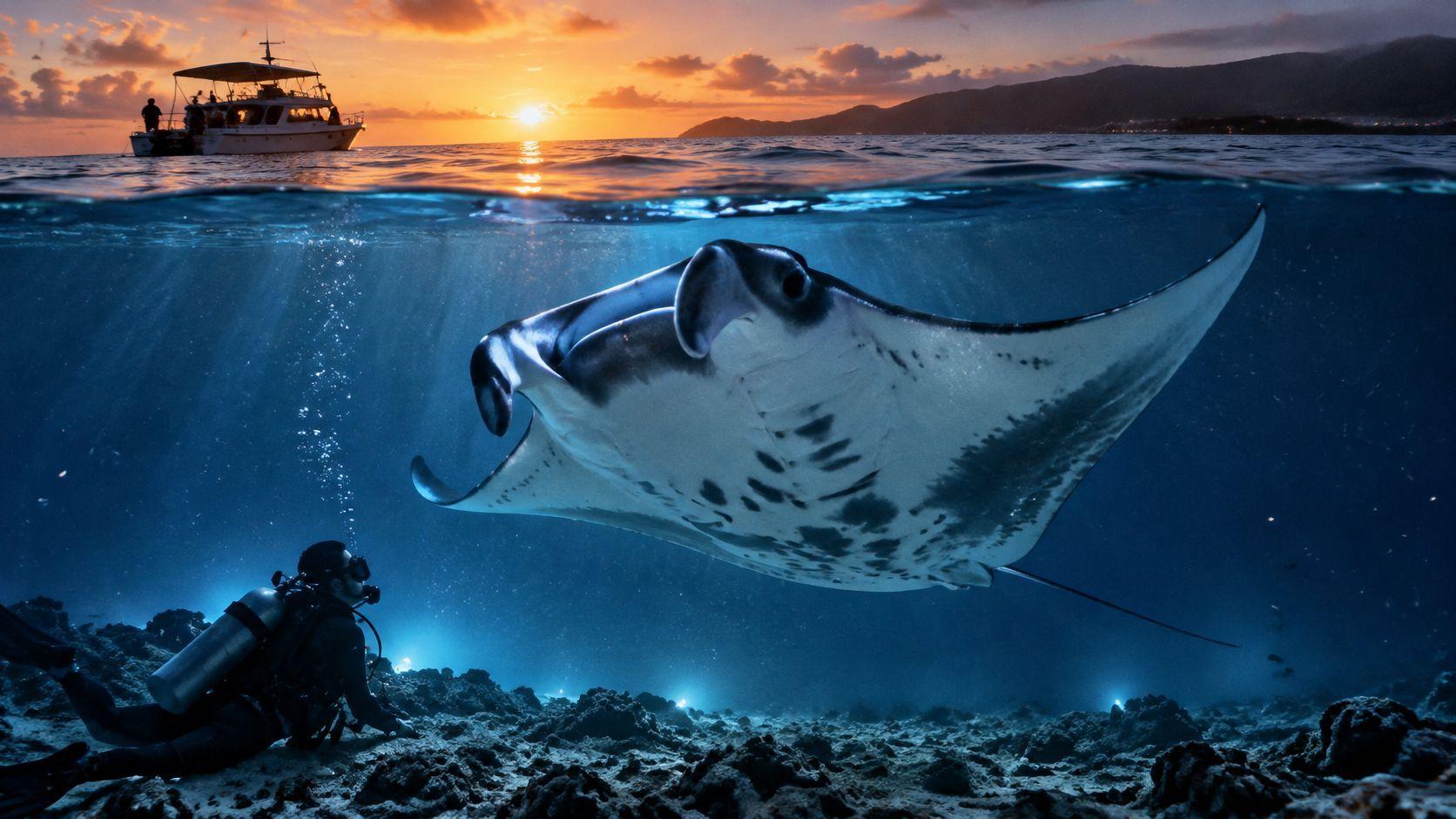
You have three nights left in Kona, a rental car in the lot, and one activity that everyone from the airport shuttle driver to your dive buddy has told you not to skip. The manta ray tour listings all blur together after a while: a photo of a huge dark shape backlit in blue, a departure time, a price, a column of checkboxes. What none of them show is the order of the evening, or what happens in the ninety minutes before any mantas might arrive.
That gap is where the useful decisions live. Who can join, when the boat leaves the harbor, why the lights work, and what you do with your hands when a ray wider than your car passes close enough to count its gill slits. Here's the evening in sequence, the way a guide walks a friend through it.
Table of Contents
- Who Qualifies for a Manta Ray Tour
- Manta Ray Tour Timeline From Harbor to Water
- Why Lights Draw Mantas Into Feeding Range
- What Sightings Really Depend On
- Rules That Keep Mantas Feeding Near You
- Health and Fatigue Decisions for Night Divers
- Comparing Kona Honu Divers as an Alternative
- Book Your Manta Ray Tour Once You Know the Plan
Who Qualifies for a Manta Ray Tour
The most common reason a diver gets turned away at the dock has nothing to do with nerve. It's a logbook that went quiet a few seasons back. Plenty of certified divers arrive in Kona having dived hard in one stretch of life and not since, and the recency check catches them before they ever kit up.
Certification is the first gate. Open Water or higher gets you aboard a certified-diver charter, and the manta night dive itself is limited to certified divers aged 16 and up. After that the crew looks at when you last dived, how your health reads on the waiver, and whether you can follow a briefing delivered in English, at night, over a running engine.
Requirement — Standard — What to Do
Certification — Open Water or higher — Bring your card to check-in
Recent diving — A logged dive recent enough to show current skills — Book a refresher first if your logbook has gone quiet
Health — Good general health — Disclose heart, lung or blood-pressure conditions before booking
Language — Able to follow an English briefing — Confirm the briefing language works for you when you book
Nitrox — Nitrox certification — Declare it to receive Nitrox
Certified divers — Aged 16 and up — Younger family members can join the night snorkel instead
Junior Open Water, ages 10 to 11 — Private guide — Arrange by phone before booking
One gate surprises families: the age floor. Kids and younger teens can't join the dive itself, but they aren't shut out of the mantas. The Manta Ray Night Snorkel accepts swimmers aged 5 and up, includes gear and a wetsuit, and views the same feeding activity from the surface.
Why the rules get stricter after sunset
Night diving stacks small demands on top of each other. Visibility shrinks to the pool of light around you, the boat moves under you while you kit up, and the hour is late enough that travel fatigue shows in your trim. A guest who can't follow the briefing, or who is diving on a condition nobody mentioned, becomes a risk to everyone in water where one guide can't watch the whole group at once.
Age rules follow the same logic. The standard minimum is 16 with certification, and Junior Open Water divers aged 10 or 11 dive only with a private guide, which the crew arranges by phone at 808-315-7114 before you book. Every one of these is a hard requirement, so sort them out from home rather than at the harbor.
Run this self-check before you pay a deposit: count your logged dives and check their dates, find the certification card, and take any heart, lung or blood-pressure condition to a physician who understands diving medicine.
Manta Ray Tour Timeline From Harbor to Water
The Honu One eases out of Honokohau Small Boat Harbor sometime between 2:45 and 4:00 p.m., depending on the season, and turns north along the coast toward Garden Eel Cove. The sun is still well up, and nothing about that light hints at what the evening becomes. That gap is the point. The dark portion of the trip arrives on a schedule, and the whole afternoon exists so you reach it prepared rather than surprised.
Stage — Timing — What Happens
Harbor departure — 2:45 to 4:00 p.m. — Check in, hear the crew's briefing on manta biology and the history of Kona's rays, board the Honu One and cruise north
Afternoon reef dive — First tank, late-afternoon light — Reef fish and lava tubes
Sunset meal and briefing — Between dives — Light meal, then a talk on how mantas feed and what the lights will do
Night manta dive — About 45 minutes — Settle on the sand around the lights and watch for mantas
Campfire — After dark — Warm up and replay the dive before the ride back
Return to harbor — 7:45 to 9:00 p.m. — Timing depends on sunset
Two briefings get confused with each other, and knowing which is which keeps your evening straight. The first happens at the harbor alongside check-in: who your guide is, where your gear goes, when you eat, plus the crew's educational talk on manta biology and how Kona's rays became a nightly gathering. It is the classroom session, delivered while everyone is still dry and paying full attention. The second comes on board between dives, over the sunset meal, and it is more tactical. How mantas feed, why the lights matter, and what your job is once you are on the sand.
Budget the whole day around this trip. A five-hour evening that ends between 7:45 and 9:00 p.m. runs past most dinner reservations, and you'll be rinsing gear while kitchens close.
Planning rule: book nothing else that night, eat before you board or pack a snack for afterward, and reach the harbor early enough to park and find the boat without hurrying.
Confirm current departure and return times when you book. Sunset in Hawaii shifts by well over an hour across the year, and the schedule moves with it.
Why Lights Draw Mantas Into Feeding Range
If you've left a porch light burning through a summer evening, you've already run this experiment. The lamp pulls in moths and midges, the air around it thickens with small flying things, and the geckos show up to hunt the edges of that bright patch. A manta ray night dive works on the same principle, with a much bigger lamp and an enormously bigger animal.
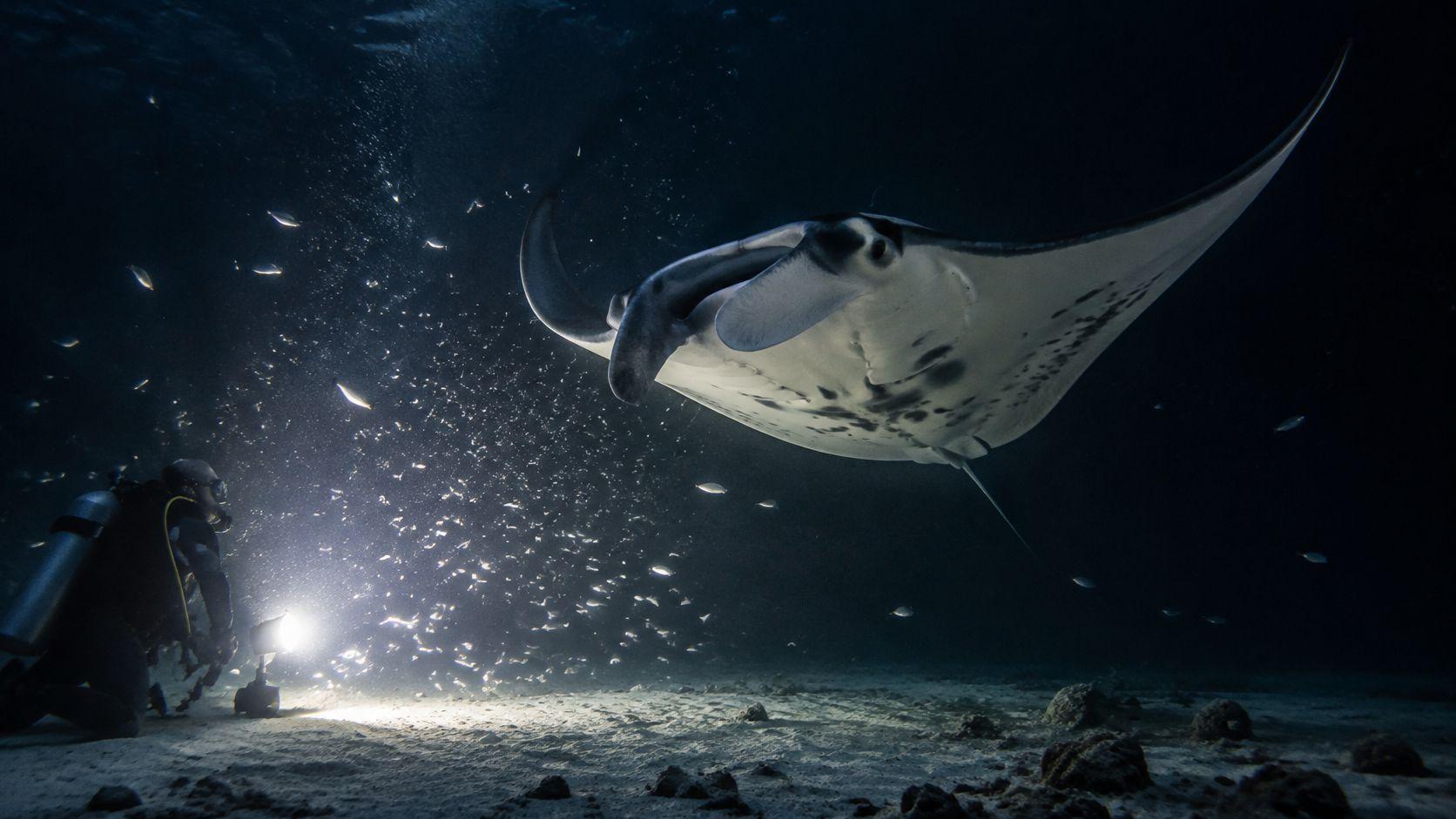
The lights set around the dive site attract and aggregate zooplankton, and the rays come to feed on the concentrated patch. A NOAA manta ray work product describes what happens next: the manta unfurls its cephalic fins into an "O" shape, opens its mouth, and drives plankton-rich water across the gill rakers, which hold the prey while the water exits through the gills. The lights are the porch bulb. The sand around them is your seat on the porch.
The prey list behind the glow
The same document names the catch: euphausiids, copepods, mysids, decapod larvae and shrimp. Feeding tracks the nightly upward movement of zooplankton, so after dark the prey crowds toward the surface and the rays follow it into diving range. The lamp gathers the dinner. The mantas arrive to eat it.
Why staying still beats swimming
A diver who chases a manta gets a rear view and pushes the animal off its feeding line. A diver who settles on the sand keeps the artificial prey patch spatially stable, so feeding runs continue close to the group. The rule on the bottom is simple: stay put, never swim after an animal, and never cross in front of another diver for a better view.
The reason goes beyond courtesy. Touching, splashing, swimming directly in front of a ray or crowding it can send the animals away entirely, and the tour's Manta Ray Green List guidelines include never touching the rays at all.
The guides turn the waiting into a story. They identify individual mantas by the spot patterns on their bellies, which are as distinct as fingerprints, and tell you which regulars have shown up tonight.
What Sightings Really Depend On
A manta ray tour can't promise you a manta. Sightings aren't guaranteed, because the rays follow their food rather than a tour schedule, and on our departures mantas appear on roughly 80 percent of trips. Treat that as one operator's own estimate and ask for its record across several seasons before you build a trip around it.
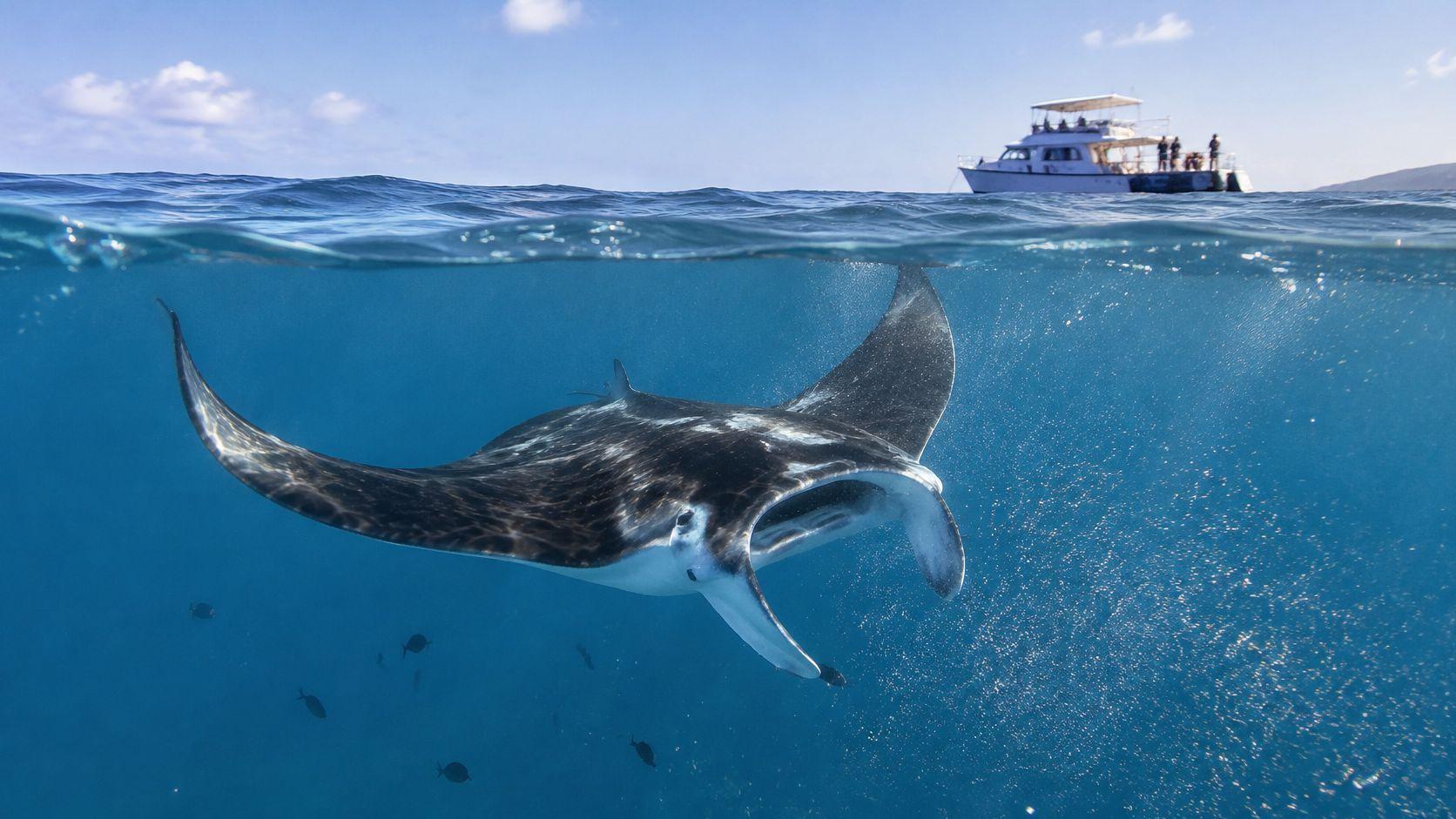
The long record from Kona explains why nobody can promise more than a probability. A 13-year analysis of citizen-science observations from Garden Eel Cove and Keauhou found that aggregation size varied both seasonally and annually, and rose with zooplankton density. Prey availability, in other words, is the main driver of whether rays use a site on any given night. Currents, tides, upwelling and temperature shifts move that prey around, and the rays move with it.
Season tilts the odds without settling them. Sightings at Garden Eel Cove and a second Kona site were generally higher from May through October than from November through April, according to a peer-reviewed analysis of the same Kona record. A winter date is still worth taking, because a single windy night can beat a good month and a flat one can lose to it.
What the light can and can't do is the honest distinction. It concentrates prey near your position. It cannot control the ocean above you. So if no mantas appear, the second dive becomes a night reef dive, and the evening still delivers something worth being cold and wet for.
Ask before you book: what's your sighting rate over the last few seasons, and what exactly does the second dive become if nothing shows?
A missed sighting isn't evidence of a failing tour or a shrinking population. It's weather and plankton.
Rules That Keep Mantas Feeding Near You
The rules go faster if you see the sign divers hold at the light board before you read them.
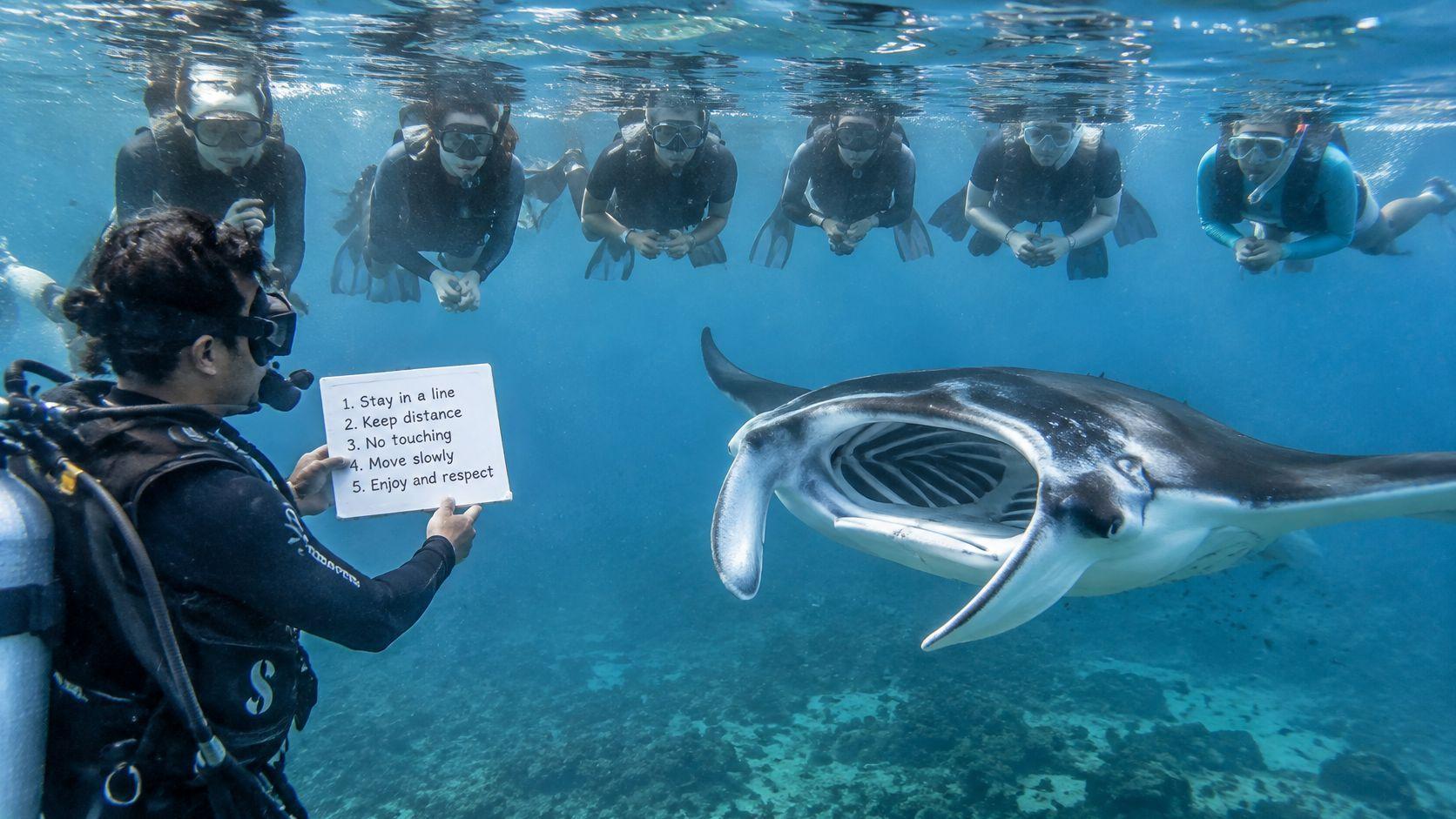
Learn these eight points before the briefing, because the rays keep feeding only when the group holds still.
- Arrive for the briefing and take the position you're given. Switching places in the dark is what breaks a formation.
- Put on the supplied wetsuit and flotation as directed. Our crew hands both out; you don't need to buy a wetsuit for the evening.
- Enter when the guide signals and descend to the chosen bottom. Sand, rubble or boulder, whichever suits the night's conditions.
- Stay on or near the bottom. The open water above you is the manta lane, and a diver hovering at mid-depth blocks it.
- Don't rise into the feeding area, chase, or touch. The Manta Ray Green List guidelines are blunt on this one: hands off, always.
- Keep bubbles away from approaching rays, and don't splash or swim across their path. A burst of exhaust reads as a threat, not an invitation.
- Hold your light steady and aim it where the guide directs. A swinging beam smears the prey patch everyone depends on.
- Stay put instead of crossing in front of another guest for a better angle. No ducking under the light board and no swimming after an animal for a photo.
The reasoning is the same for every rule. Touching, splashing, blocking a feeding path or crowding a ray pushes it out of the area, and a scattered group sees less than a disciplined one. Crowding isn't hypothetical: Hawaii County's manta ray viewing safety assessment counted roughly 16 to 19 vessels and an estimated 160 to 190 snorkelers and divers in the water on a typical night in August 2015 at the two primary Kona sites. Discipline is what separates a calm encounter from a queue.
That's why our night dive caps the boat at 18 divers rather than filling a larger deck.
Health and Fatigue Decisions for Night Divers
Five hours sounds short until you lay it end to end: harbor briefing, gear fitting, boat ride, the dive itself, then the slow climb back to normal on the return. For certified divers aged 16 and up, the night portion can also follow an afternoon reef dive, so the key question becomes whether you can do the second dive well after a long day.
Treat fatigue like gas planning. If you flew in recently, drove the coast, or already spent time in the water, say so before the first descent. Hydrate through the afternoon, eat the sunset meal if it is part of your trip, and keep alcohol out of the equation. A diver who is cold, dehydrated, hungover or sleepy is more likely to make small mistakes at exactly the moment the group needs stillness.
Standard scientific diving guidance recommends waiting 18 hours after repetitive or multiple dives before flying or ascending to altitude. Build transport around that window: keep inter-island flights and Mauna Kea drives outside it. If decompression illness is suspected, get emergency medical care first and specialist consultation after, and learn where the nearest hyperbaric facility is before you dive.
The rule that matters: if a headache, nausea, a head cold or unusual tiredness shows up between dives, tell the guide before the manta descent. Missing one dive costs an hour. Diving through symptoms can cost the trip.
Comparing Kona Honu Divers as an Alternative
If you went looking for a second operator offering the same two-tank manta evening, you already found it, because the Manta Ray Night Dive is run with Kona Honu Divers. The published itinerary lays out one continuous arc: an afternoon reef dive, a sunset meal, a manta briefing and a campfire after dark, with the night dive itself staged at Garden Eel Cove. The boat is the Honu One out of Honokohau Harbor, cruising north along the coast.
That shared itinerary matters for eligibility. The bar is Open Water certification or higher, a logged dive inside the previous two years, and a minimum age of 16 for the dive itself. Tanks, weights, boat transport, the briefing and a dive light come with the package, and Nitrox comes at no additional charge if you carry the certification, which stretches your no-decompression margin on a second descent.
Element — What the charter provides — What it means for your evening
Eligibility — Open Water or higher, age 16 and up, logged dive within two years — Confirms you can make the second descent, not just board the boat
Itinerary — Afternoon reef dive, sunset meal, manta briefing, night dive, campfire — Your surface interval happens over food and the briefing rather than on deck
Included — Boat transport, briefing, tanks, weights, dive light — Check which personal items the quoted price covers
Nitrox — No charge for Nitrox-certified divers — Extends your no-decompression time on the day's second dive
Positioning — An assigned spot on the guide's chosen bottom, with no chasing, touching or bubbling — Keeps mantas feeding in range instead of scattering them
Group size — One guide for every six divers, per the full two-tank itinerary — Enough eyes on the group to enforce positioning after dark
No-sighting plan — The second dive becomes a guided night reef dive — You still dive after dark; only the cast changes
The positioning rules follow Manta Ray Green List guidelines, so the no-contact standard is enforced at the site rather than left to judgment. The no-sighting plan works the same way sightings work everywhere off Kona: the rays follow their food, and a quiet evening still ends with a dive instead of an empty second tank.
One split is worth sorting before you reach the harbor. This boat takes certified divers, while the Manta Ray Night Snorkel is a separate surface-viewing tour with gear and a wetsuit included, run for swimmers by a lifeguard-certified crew. A mixed group of divers and non-divers means two different products, and knowing which is which keeps anyone from being surprised at check-in.
Book Your Manta Ray Tour Once You Know the Plan
Popular manta outings sell out weeks ahead, so the reservation comes before the packing list. Once you've confirmed eligibility, odds and schedule, the date is the only thing left to lose.
Check the total before you pay. The night dive is listed at up to $299, plus tax and fees, and pricing moves with demand, so an old blog post or a cached search result can be off by a wide margin. Read the cancellation terms too; our booking is listed with free cancellation, which matters when weather or a head cold rearranges your week.
Three confirmations belong in writing before money changes hands:
- Your paperwork: certification level and a logged dive inside two years.
- Your group: whether a teenager needs an accompanying adult or a younger Junior Open Water diver needs a private guide booked separately.
- Your fallback: what the second dive becomes if no mantas appear.
Then pick the operator whose group size, briefing style and safety rules fit your group, and book directly with them, whether that's Manta Ray Night Dive or the Kona Honu Divers charter.
Our two-tank manta ray night dive leaves Honokohau Harbor aboard the Honu One with a late-afternoon reef dive, a sunset meal, a manta briefing, and a guided night dive at Garden Eel Cove. If you want the evening described here, with the positioning rules and the sighting odds explained before you get in the water, Manta Ray Night Dive lays out the schedule, what's included and the cancellation terms so you can decide with the whole picture in front of you. Reserve early, since these trips fill weeks before travel dates.